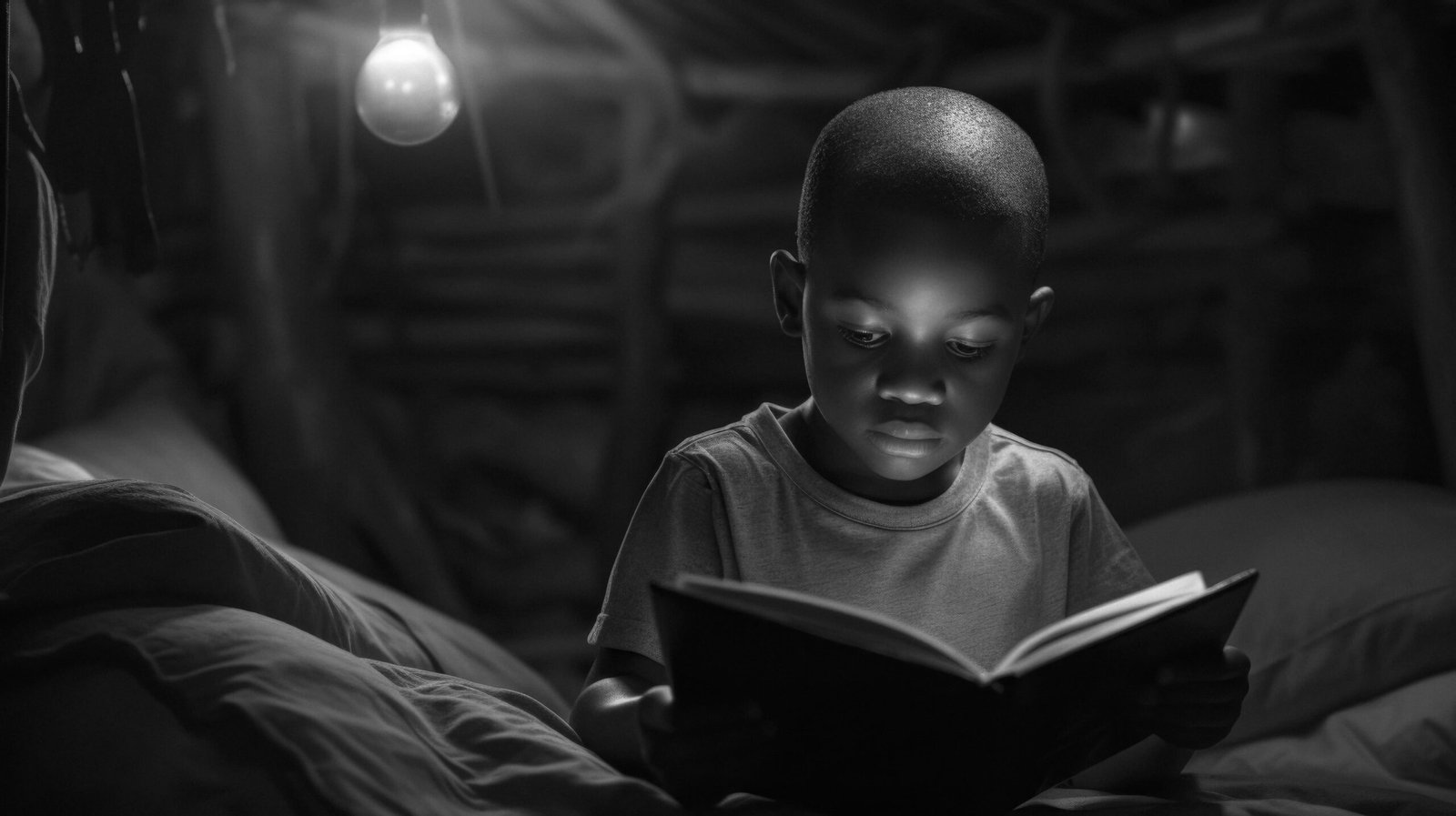

Across Sub-Saharan Africa, the “learning crisis” becomes clear the moment you step into a typical classroom. Millions of children go to school every day, yet many still leave without basic reading and maths skills. This quiet issue, often called “silent exclusion” shows that being in a classroom does not guarantee real learning.
As Professor Kwame Akyeampong notes, “Many children attend school but do not learn much, teaching is above their level; and their own knowledge is largely ignored.”
Behind this problem are deeper challenges: overcrowded schools, exhausted teachers, lessons that do not relate to the children’s real lives. And in many cases, the use of languages many learners struggle to understand. Poverty, the mix of languages children speak, and long-standing equalities also shape how they learn.
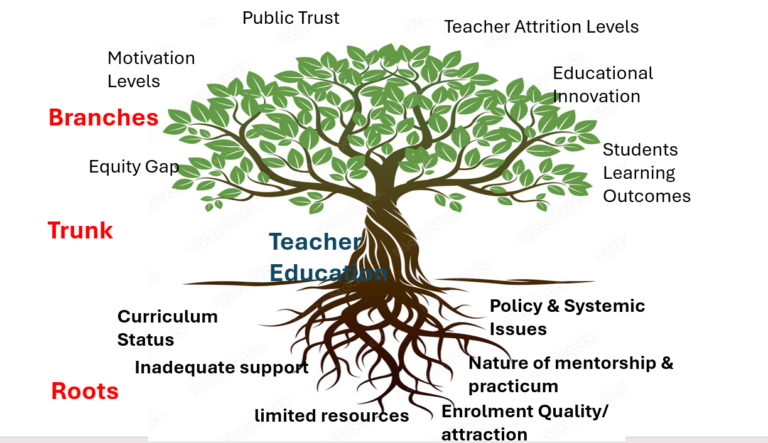
At the same time, teachers are often trained in very rigid, single-grade systems but expected to manage large classes filled with students with different abilities, languages, and backgrounds. Their training is often too theoretical, leaving them unprepared for the realities they face.
Inequalities also show up between rural and urban schools, between mother-tongue and English-medium instruction, and between global expectations of schooling and African realities. Therefore, to understand Africa’s learning dilemma, we must understand the environments where learning happens and the people who shape those spaces.
Africa has long been viewed by international policy and education research as needing to be “fixed” with foreign teaching methods, imported curricula, and outside expertise. According to Akyeampong and Higgins (2025), this perspective is misleading because it focuses only on what is missing and ignores the strengths already present in African communities.
“Global education policies present the educational challenge in one-sided strong deficit terms; emphasizing what is lacking and failing to recognize the potential of existing knowledge resources.”
African learners and teachers bring valuable strengths that can improve education when they are recognized and used well. These strengths include cultural knowledge, multilingual skills, life experiences, and community wisdom. The problem is not that these assets do not exist; but that the system often fails to acknowledge or build on them. Every learner enters the classroom with resources that can support their learning. Even when they struggle, those struggles can be seen as opportunities for growth, not barriers.
Take language, for example. A learner’s first language is a powerful tool for learning and can support the development of other languages. If we adopt this mindset, we begin to see teachers and learners not as lacking, but as creative and capable participants in the learning process.
Education Rooted in African Realities
For learning to be effective and sustainable, it needs to relate to the communities it serves. This means designing curricula and teaching methods that honour the local languages, values, and ways of life.
Although there has been progress since the post-colonial period, many learners still experience teaching and content that feels disconnected from their everyday realities. The goal is not to reject global knowledge but to adapt it so it fits African contexts.
As Akyeampong said:
“Let’s do less research on our problems and focus more on what works for our context.”
For example, Competency-Based Education (CBE) is most effective when the skills it teaches are rooted in African problem-solving traditions, local values and community life, rather than copied directly from other countries.
Education that values the “funds of knowledge” found in African families such as crafts, storytelling, community decision-making, and multilingual communication creates learning that is real, meaningful and sustainable. When we see each learner as someone who brings knowledge, rather than a problem to fix, we unlock the creativity and potential already present in African classrooms.
Building a Culture of Learning
The global education community often talks about “scaling what works.” But Prof. Akyeampong reminds us that long-term success does not come from scaling specific programs. It comes from building a strong learning culture. Programs come and go, but a culture of reflective teaching, collaboration, and continuous learning can last.
“We do not scale the intervention that works… we scale a culture. It is the culture that remains once the intervention fades.”
Africa’s task is to build a learning culture that is grounded in its people, responsive to local realities, and able to adapt to change. Copying solutions from elsewhere will never be enough.
Conclusion
Africa’s so-called “learning crisis” is not just a story of failure. It is also a story of potential waiting to be recognized. Global narratives often focus on what Africa lacks, which blinds the world to the knowledge, creativity, and resilience already thriving in African classrooms.
To reclaim this narrative, we must rethink teacher preparation and see learning as a rediscovery of the knowledge, culture, and human potential already present in African communities. As Akyeampong and Higgins (2025) remind us, the world’s current moral and social challenges demand a new way of thinking about where and how learning happens.
“The current moral crisis and global social injustice urgently demand a radical reappraisal of the paradigms where learning challenges are nurtured.”
Africa’s children are not problems to be solved. They are resources to be nurtured. The future of African education lies in building a culture of belief: belief in the learner, belief in the teacher, and belief in Africa’s ability to create its own path forward, rather than relying on imported answers.